What is the benefit of using organic alcohol vs. denatured alcohol when doing Ethanol extraction?

Organic Ethanol is GRAS (generally regarded as safe) and food grade fit for human consumption. Therefore, if your end product is for human consumption, organic ethanol is the way to go!

In comparison, denatured alcohol is Ethanol made unfit for human consumption by adding one or more chemicals to it.  Denaturing agents include Heptane, Methanol, and other harmful chemicals.

What are the general steps of Ethanol Extraction?

There are two main processes involved: Extraction and Solvent Recovery. 

Extraction: Introduce your Ethanol (solvent) to your biomass, which pulls the desired compounds out of the plant material into solution. This solution must be processed to remove unwanted compounds. There are various ways to do this, i.e. winterization and filtration.  Now that the desired compounds have been captured, the ethanol must be removed from solution.  

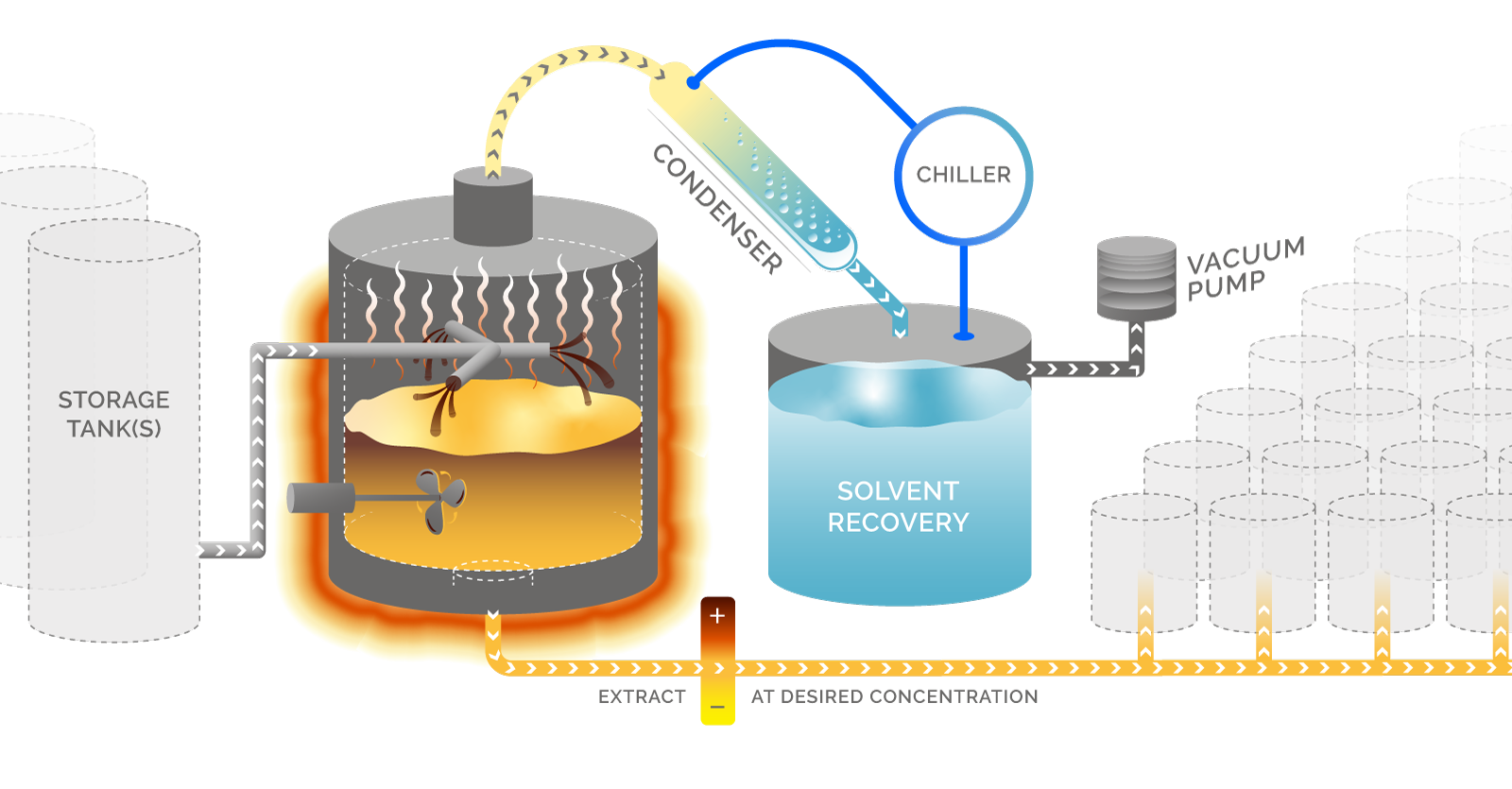
Solvent Recovery: The extracted solution is put under vacuum, with or without heat.  This can be done because your solvents have a much lower boiling point than your extract.  Ethanol boils out of the solution and is recaptured for reuse. As ethanol boils out of solution, the solution is reduced to a thick viscous extract.

Ethanol Extraction Process Diagram - Eden Labs
1

Fill Prechill Tanks

Prechill tanks are filled with Ethanol
2

Chill Ethanol

Ethanol is brought down to -40º C using Cryochiller and jacketed Prechill Tanks
3

Spray Ethanol into Extractor

Spray Ethanol from Prechill Tanks to Extractor, soaking biomass
4

Circulate Extractor Ethanol

Circulate the Extractor Ethanol to finish run time
5

Filter and Store

Pump out extract solution thru filter assembly into storage tank
  • 1 – Fill Prechill Tanks

    Prechill tanks are filled with Ethanol

  • 2 – Chill Ethanol

    Ethanol is brought down to -40º C using Cryochiller and jacketed Prechill Tanks

  • 3 – Spray Ethanol into Extractor

    Spray Ethanol from Prechill Tanks to Extractor, soaking biomass

  • 4 – Circulate Extractor Ethanol

    Circulate the Extractor Ethanol to finish run time

  • 5 – Filter and Store

    Pump out extract solution thru filter assembly into storage tank

Centrifuge for excess solvent can be included as necessary per material specified

Ethanol Solvent Recovery Diagram - Eden Labs
1

Heater

Heaters are turned on, heating up water in jacket
2

Vacuum Pump

Vacuum is pulled on system
3

Distiller

Solution is pumped into distiller.
4

Mixer

Once liquid level gets above propeller, turn on mixer
5

Evaporation

Ethanol vapors evaporate out of the solution
6

Condensation

Ethanol vapors are condensed from vapor to liquid
7

Liquid Ethanol

Liquid ethanol is collected
8

Final Extract

Extract is pumped out of distiller once desired concentration is achieved
  • 1 – Heater

    Heaters are turned on, heating up water in jacket

  • 2 – Vacuum Pump

    Vacuum is pulled on system

  • 3 – Distiller

    Solution is pumped into distiller.

  • 4 – Mixer

    Once liquid level gets above propeller, turn on mixer

  • 5 – Evaporation

    Ethanol vapors evaporate out of the solution

  • 6 – Condensation

    Ethanol vapors are condensed from vapor to liquid

  • 7 – Liquid Ethanol

    Liquid ethanol is collected

  • 8 – Final Extract

    Extract is pumped out of distiller once desired concentration is achieved

What are the benefits of Cryo Ethanol Extraction?

Eden Labs’ Cryo Ethanol Platform can operate down to -40C. When the solvent and biomass are brought down to these temperatures, unwanted compounds, such as fats and waxes, do not dissolve into compound. This reduces, or eliminates, the need to post process the solution to remove unwanted compounds.

Why use Supercritical CO2?

CO2 by itself is not a strong solvent, but by putting it under pressure and adding some heat, it extracts an incredibly rich, concentrated and toxin-free product. This makes for a safer work environment and a healthier end product. Many of the companies we work with in the flavoring and nutraceuticals industry tout the fact that their product is produced with Supercritical CO2 extraction as an effective marketing tool. Consumers are becoming more conscious of how products are prepared and what is in them.

What kind of routine maintenance do supercritical systems require?

Our systems can run continuously with little maintenance. The materials which run through the vessel are soluble, so almost no cleaning is required. For example, when using the system to extract new materials, the only maintenance required is to run the system while it is empty in order to clean it out. If you need to be certain there are no residuals, you flush the system with ethanol. The minimal maintenance required consists of cleaning the filter behind the pump, testing the relief valves, monitoring compressor oil levels, and occasionally replacing gaskets and O-rings. To keep you and your business consistently running, routine maintenance will be taught during your training.

What is included in the cost of the system?

Included in the cost of a basic CO2 extraction system are: the extraction system; pneumatic or electric drive pump, depending on the model; cooling and heating systems; an air compressor (for systems with a pneumatic pump); two days of Eden Labs’ hands-on training at our facility; two hours of telephone support; three year warranty; and system and operator certification, as required. Setup and configuration of your Eden Labs equipment is available for a nominal fee. Setup includes configuring your equipment in your facility/lab and connecting it to your pre installed electrical and plumping.

What’s the ideal environment to operate the system?

Maximum environmental temperature should be about 22°C / 72°F. Humidity should be in the range of 30%-60%. You will want 10 – 15 air exchanges per hour or as required by regulation. For ventilation, you will want enough to sufficiently remove gases released from vent points on the system.

How should I prep the plant material?

We recommend a 1 to 3 millimeter grind size, this is based on current industry data, as dry as possible, with an even pack to reduce channeling.

Still Searching?

Contact Us Today →

Website powered by Fusion